PINS

Follow Me on Pinterest
Showing posts with label art. Show all posts

Thursday, April 26, 2012

Arantzazu Martinez paintings

  Arantzazu Martinez is a is an academic painter from Vitoria, Spain.She attended the Fine Arts University of Basque Country and graduated in 2000. Unable to find any classical art training, she moved to New York. There she enrolled at New York Academy Figurative Art MFA program and graduated in 2002.

  It was during 2002 that she met the founder of Water Street Atelier, the Hudson River Fellowship and the Grand Central Academy, Jacob Collins. He would go on to become Arantzazu's mentor as well. To develop her training further, she studied under him at the Water Street Atelier from 2002 - 2005 where she completed her training following the nineteenth century academic method.

  The technical expertise,the considered composition, the exceptional treatment of light and the human form are evident and much appreciated in Martinez's work. The symbiotic relationship of these elements creates imagery that evokes Romanticism and Symbolism. Her work has the ability to create a dreamworld where magic and fantasy are part of reality.

  The quality of her work has been recognised internationally; she has been commissioned by Lucasfilm Ltd to take part in an international project of Star Wars Visions and more recently on a new image project for Disney in which she is presently immersed.

  And here is some of Arantzazu Martinez art work:

The House of the Witches


Rancor 

Spring  

Time and Beauty


The Man of Prophecy 

Green Eyes


Hideout

The Fallen Angel


Bird Girl

At Dawn

Always in my Thoughts

Sunday, April 1, 2012

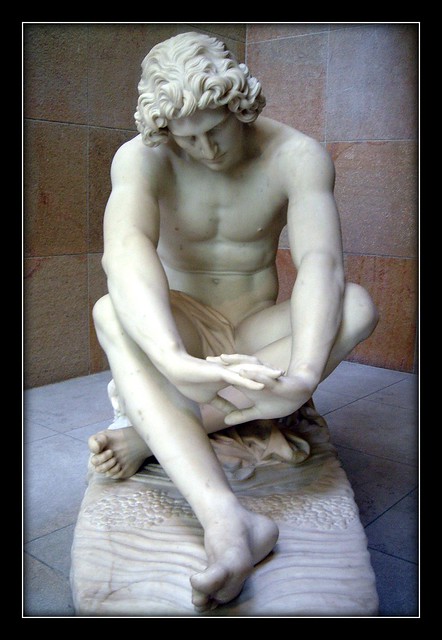
Le Desespoir

  Jean-Joseph Perraud statue, Le Desespoir ( the Despair) was first conducted in 1861 and then marble plaster and then in 1869 it was presented at  the Salon, beginning in 1725 the official art exhibition of the Academie des Beaux-Arts in Paris, France. Le Desespoir measures 68cm x 108cm x118cm. The figure, seated on the ground, according to a well established convention, is intended to be an allegory of the tragic condition of human existence. The figure is without accessories and allows the visitor complete freedom of interpretation.


Friday, March 16, 2012

Imogen Cunningham & Her Photos

  American photographer of botanical photography, nudes and industrial landscapes Imogen Cunningham, also known as Imo, was born on April 12, 1883 in Portland, Oregon. At the age of 18 she bought her first camera, a 4x5 inch view camera, from the American School of Art located in Scranton, Pennsylvania. Ms. Cunningham quickly lost interest in the camera and sold it to a friend.  Five years later, while attending the University of Washington in Seattle, she became interested in photography again with her main inspiration, for picking up the camera again, influential American photographer, Gertrude Kasebier. With the help of  Dr. Horace Byers, Ms. Cunningham's chemistry professor, she began to study the chemistry behind photography and subsidized her tuition by taking pictures of plants for the botany department.


After graduating in 1907, Imogen Cunningham went to work for Edward S. Curtis, photographer of American Indians and the American West, in his Seattle, Washington studio, gaining knowledge about practical photography and the portrait business.

  She won a scholarship, in 1909, from her sorority, Pi Beta Phi, for foreign study and applied with Professor Robert Luther at Technische Hochschule in Dresden, Germany. There she did not take many photographs and instead concentrated on her studies. In May of 1910, she finished her paper on "About the Direct Development of Platinum Paper for Brown Tones, in which she described her process to increase printing speed, improve clarity of highlights tones and produce sepia tones. On her way back home to Seattle she met photographer Alvin Langdon Coburn in London and photographer and modern art promoter, Alfred Stieglitz and Gertrude Kasebier.
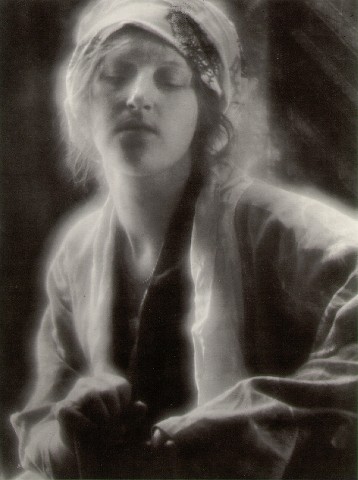
Dream - 1910


  Ms. Cunningham open her studio in Seattle and went on to win acclaim for her pictorial and portraiture work. Most of her studio work came from sitters in their own home, in her living room or in the woods surrounding her cottage. In 1913, she became a sought after photographer and had an exhibition at the Brooklyn Academy of Arts and Sciences.

  In 1914, Ms. Cunnigham's works were shown at An International Exhibition of Photography in New York. Also, Wilson's Photographic Magazine published a portfolio of her work.

  In 1915 she married teacher and artist, Roi Partridge. He posed for a series of nudes, which were shown by the Seattle Fine Arts Society. Even though she was critically praised for her work, Ms. Cunningham did not revisit those photographs for another 55 years. Between the time she married in 1915 and 1920, she continued her work and had 3 children. In 1920 the family moved to San Francisco where Roi Partridge taught at Mills College.


Imo refined her style and began taking a greater interest in pattern and detail and becoming increasingly interested in botanical photography, especially flowers. She carried out an in-depth study of the magnolia flower between 1923 and 1925. Later on in the decade she turned her attention to an industrial theme, creating several industrial landscapes in Oakland and Los Angles.


  In 1929, photographer Edward Winston nominated 10 of her photographs for inclusion in the Film und Foto exhibition, which was held in Stuggart, Germany in May - June of 1929, and her renowned Two Callas, debuted in that exhibition.


Unmade Bed - 1957


  Once again Imo changed direction, particularly the human form and specifically hands of artist and musicians. This led her to be employed by Vanity Fair magazine, photographing stars without make-up. With unsentimental straightforwardness, in 1932 she became one of the 7 founding member of Group f/6, a group of San Francisco photographers who shared a common photographic style characterized by sharp-focused and carefully framed images seen through a particular Western (U.S.) viewpoint.

  In 1934 Imo was invited to do some work for Vanity Fair in New York. She wanted to go and her husband wanted her to wait until he could go with her. She said no and went and they later divorced. She continued to work for the magazine until 1936, when it stopped publication.
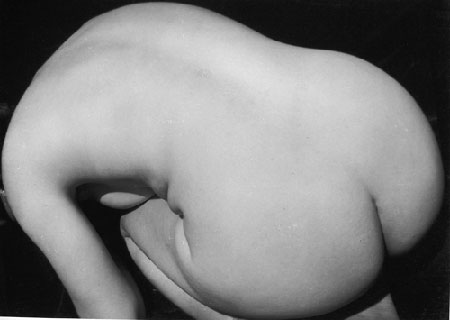
Nude - 1936


  In 1940, while supporting herself with commercial and studio photography, Imo turned to documentary street photography. Ansel Adams, in 1945, invited Ms. Cunningham to accept a faculty position for the art photography department at the California School of Fine Arts.


  In 1973 her work was exhibited at the Rencontres d'Arles festival in France through the group exhibition : Trois photographes americaines, Imogen Cunningham, Linda Connor, Judy Dater. Ms. Cunningham was continuing her work taking photographs until shortly before her death at the age of 93 on June 24, 1976 in San Francisco, California.

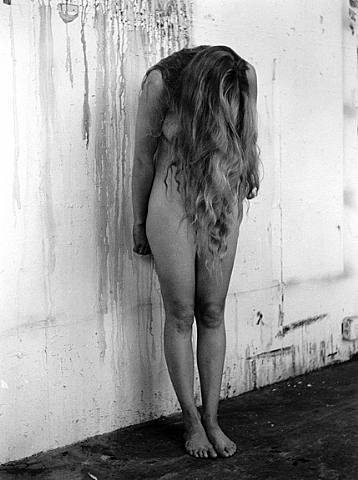
Phoenix on Her Side - 1968


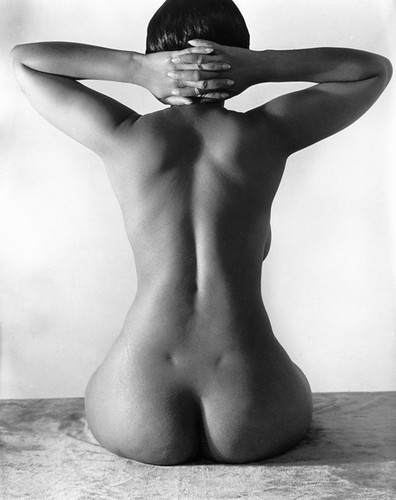
Nude - 1939


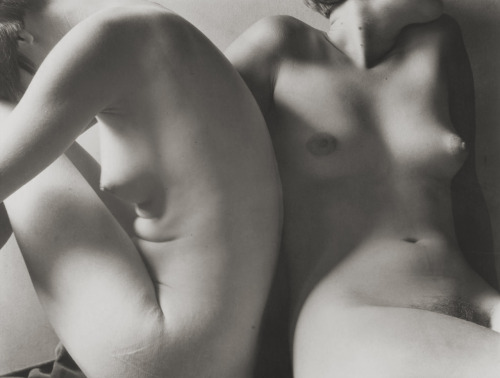
two sisters - 1928 

Imogen Cunningham and model/writer, Twinka - 1974 by Judy Dater


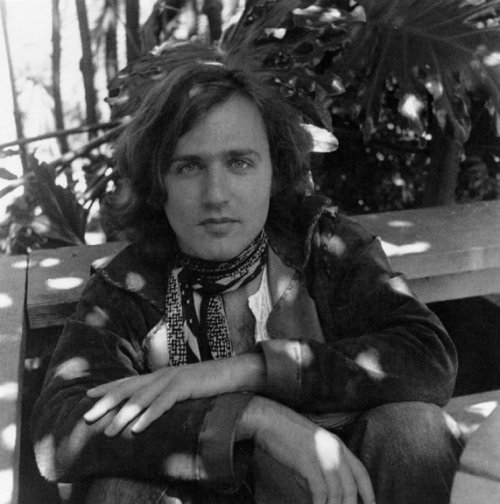
Gerard Malanga - poet, 1973

Dance 3 - 1926

Three Dancers - Mills College, 1929

Three Heads and Four Hands - 1964

Phoenix - 1969

Navajo Rug - 1968

Martha Graham

Tuberose

Sunday, February 26, 2012

Lady Godiva (the song)


  The song "Lady Godiva" was performed by the British duo Peter and Gordon. It was released it Britain on September 9, 1966 and it was also released in the month of September of '66 in the U.S."Lady Godiva is about a woman who becomes involved in a burlesque show. As part of her routine this Lady Godiva, like the one of Covenetry, England, 'has long blonde hair, that hangs around her knees' 


LADY GODIVA

Seventeen, a beauty queen,
She made a ride that caused a scene,
In the Town

Her long blonde hair,
Hangin' down around her knees
All the cats who dig striptease
Prayin' for a little breeze
 Her long blonde hair
Fallin' down around her arms
Hidin' all the lady's charms
Lady Godiva

She found fame and made her name,
A Hollywood director came to town
And said to her
"How'd you like to be a star?"
"You're a girl that could go far"
" 'specially dressed the way you are"
She smiled at him
Gave her pretty head a shake
That was Lady G's mistake
A-hey-hey-hey
Lady Godiva

He directs certificate 'X'
And people are now craning their necks
To see her
'Cause she's a star
One that everybody knows
Finished with the striptease shows
Now she can't afford her clothes.

Her long blonde hair
Lyin' on the barber's floor
Doesn't need it anymore
Lady Godiva


Sunday, November 20, 2011

Lady Godiva

.
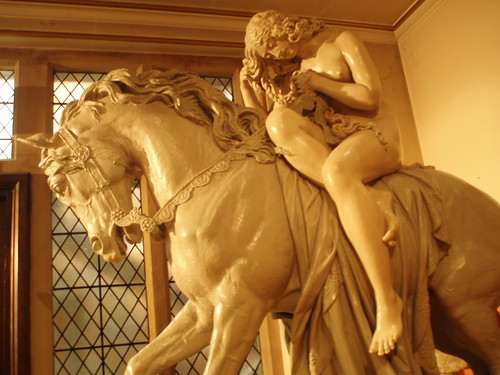
19th century Lady Godiva statue John Thomas,sculptor


  Lady Godiva or Godgifu was an English countess, who according to historians, flourished circa 1040-1080. She was the wife of Leofric,Earl of Mercia. The couple were noted for their great generosity to religious houses.In 1043 Leofric founded and endowed a Benedictine monastery at Coventry, to which Godiva persuaded Leofric to found the monastery her; and the endowment of the minister at Stow St. Mary, Lincolnshire. Lady Godiva and her husband are also commemorated as benefactors of other monasteries at Chester, Much Wenlock,  and Evesham. The town of Coventry received from Lady Godiva, a number of works  in precious metals that were made for this purpose and bequeathed a necklace valued at 100 marks of silver. Evesham received another necklace, to be hung around the figure of the Virgin Mary accompanying the life -size gold and silver rood* and St. Paul's Cathedral, London received a a gold - fringed chasuble*.  She and her husband were among the most munificent* of several large Anglo-Saxon donors of the last decade before the Norman Conquest; the Norman bishops made short work of their gifts, either carrying them off to Normandy or melting them down for bullion.

   The manor of Woolhope in Herfordshire, along with 4 others, was given to the cathedral at Herefordshire before the Norman Conquest by Godiva and Wulviva ( said to be Godiva's sister). The church has a 20th century stained glass window representing them.

  Lady Godiva's mark, di Ego Godiva Comitissa diu istud desideravi, appears on charter that was supposedly given to her by Thorold of Bucknall to the Benedictine monastery of Spalding. The charter is considered to be a fake by many historians. Even so, it is possible for Thorold to be Lady Godiva's brother.

 After the death of her husband in 1057, Godiva lived on until sometime between the Norman Conquest an 1080. She is mentioned in the Doomsday survey* as one of the few Anglo-Saxons and the only woman to remain a major landholder shortly after the Conquest. By the time of this survey, in 1086, Godiva had died, but what had been her lands are still listed, but now held by others.

   Lady Godiva's burial spot is a matter of debate. The Chronicon Abbatiae de Evesham or the Chronicles of Evesham,say that she is buried the Church of the Blessed Trinity at Evesham, which is no longer standing. But according to the Oxford Dictionary of National Biography Lady Godiva is buried by Leofric in Coventry, no matter what the Evesham Chronicles say.


Lady Godiva statue, Sir William Reid Dick, 1949


 Lady Godiva is known to popular legend, she obtained a reduction in the excessive taxes levied by her husband on the people of Coventry, by consenting to ride through town naked on a white horse. The townspeople were to stay inside and shut there windows  while she to look at her ride, clothed only in her long hair. But while she was on her legendary ride, one townsman, a tailor, disobeyed her proclamation and looks, forever being known as Peeping Tom. In the end Lady Godiva's husband keeps his word and does away with the required taxation of the people of Coventry.


Lady Godiva by John Collier, ca 1897


*ROOD- crucifix
* CHASUBLE - outermost liturgical vestment worn by clergy for the celebration of the Eucharist.
*MUNIFICENT- very liberal in giving or bestowing
*DOOMSDAY SURVEY- record of the great survey of much of England and parts of Wales completed in 1086.


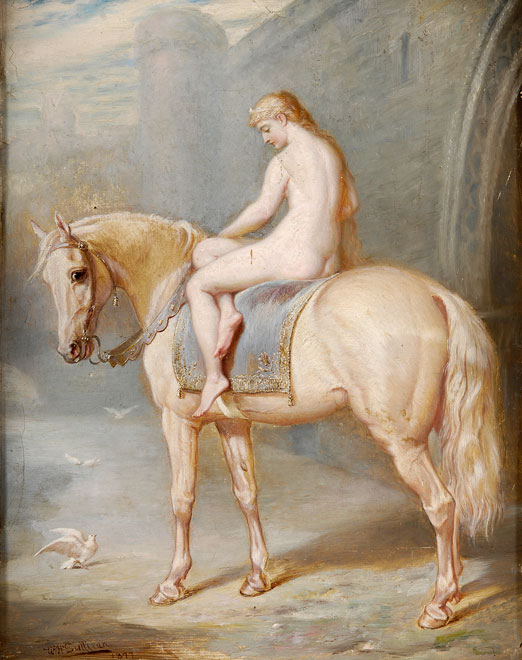
 Lady Godiva by William Holmes Sullivan 1877